
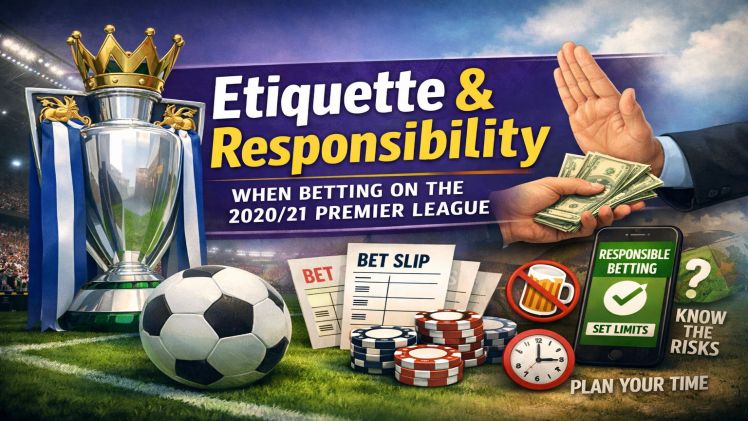
Premier League betting in 2018/19 unfolded in an environment saturated with gambling messages, shirt sponsors, and in‑play options that reached fans almost constantly. In that setting, personal etiquette and responsibility were not abstract ideals; they were the only real safeguards against harm for both bettors and the communities around them. Understanding how individual behaviour interacts with marketing, technology, and other supporters’ experiences is essential for anyone who wagers on football and wants to keep it under control.
Why Responsibility Became Central During the 2018/19 Season
By 2018/19, the Premier League’s commercial ecosystem had woven gambling deeply into the visual and emotional fabric of matchdays. A large share of clubs carried betting sponsors on their shirts or around their stadiums, and broadcasts showed thousands of gambling messages across a single weekend. Research has linked this volume of exposure to increased betting participation, particularly among younger adults, and to growth in in‑play wagering habits. In this context, responsibility shifted from a nice‑to‑have principle to a practical necessity: without deliberate self‑regulation, many fans were nudged toward more frequent and riskier betting than they initially intended.
Respecting Other Fans When Betting Around Matches
Betting on the Premier League does not occur in isolation; it sits inside social spaces—stadiums, pubs, group chats—where not everyone shares the same risk appetite or financial situation. Turning every game into a loud discussion about stakes and winnings can pressure friends or family members into gambling when they would prefer not to, especially in mixed-age groups. Showing courtesy means recognising that others may be managing past or current gambling problems and avoiding behaviour that normalises betting as the only “real” way to enjoy a match. The impact of this restraint is that football remains inclusive, with room for both bettors and non‑bettors to share the same 2018/19 moments without tension.
Setting Personal Limits as a Core Responsibility
At an individual level, responsible betting begins with clearly defined financial and time boundaries, rather than with the size of any single wager. Guides on safe gambling highlight the need to stake only what you can afford to lose, treat betting as entertainment rather than income, and decide limits before emotions become involved. In the 2018/19 Premier League environment—crowded with live odds, quick in‑play prompts, and back‑to‑back fixtures—those limits acted as a counterweight to constant prompts to “have another go.” When bettors used deposit caps, session reminders, or strict per‑week budgets, they created a buffer between the intensity of the season and their own financial stability. The result was a clearer distinction between following the drama of the league and letting that drama dictate their spending.
How Limits Protect Against Emotional Decisions
Limits are effective because they intervene before emotion becomes the main driver of behaviour. Losses on a high‑profile 2018/19 match—whether a title clash or a relegation six‑pointer—could easily trigger a desire to chase, especially when more markets were immediately available. By pre‑committing to financial boundaries, bettors made it mechanically harder to translate frustration into additional, poorly reasoned bets. This mechanism improved long‑term outcomes, not by increasing the win rate, but by preventing impulsive spikes in staking that often turned manageable losses into serious problems.
Choosing Where and How You Bet
Responsibility also involves selecting regulated, trustworthy places to bet and understanding the tools they offer. Guidance on ethical football betting stresses that using licensed operators helps ensure fair settlement, secure payments, and access to self‑exclusion or limit‑setting features. During and after the 2018/19 season, concerns grew about some unlicensed or white‑label betting firms targeting football audiences without adequate safeguards. Bettors who checked licensing status and terms before depositing money not only protected themselves but also avoided supporting arrangements that regulators later criticised as harmful or non‑compliant. The impact was a small but real shift in demand toward operators more aligned with long‑term consumer protection.
In practical terms, this meant paying attention to who sponsored 2018/19 Premier League clubs and broadcasts, then taking an extra step to verify which brands were properly regulated in the bettor’s jurisdiction. Fans who made that effort were better placed to access complaint mechanisms or safety tools if something went wrong. They also contributed indirectly to pressure on clubs and leagues to prioritise partnerships with operators meeting higher standards.
Using UFABET and Similar Services with Deliberate Boundaries
Digital services that offer football betting make it easy to move quickly between markets, but that convenience can undermine responsible habits if not handled carefully. When an online betting site presents Premier League 2018/19 odds alongside a wide range of other events, the path from a single planned wager to multiple spontaneous bets becomes very short. From an etiquette and responsibility standpoint, the key is not whether a particular service is sophisticated, but how consciously a user engages with its features. Some bettors, aware of this, used ufabet168 only after deciding stake size and number of bets in advance, then relied on built‑in tools—deposit limits, reality checks, and time reminders—to ensure that their actual behaviour stayed close to that plan, reducing the likelihood that a tense 2018/19 match would lead them to exceed personal boundaries.
Recognising Signs of Harm and Responding Early
Social responsibility includes an awareness of how problem gambling develops and what warning signs look like in yourself and others. Research into football betting has documented rising rates of in‑play wagering and gambling harm among younger fans, especially when betting is integrated into their regular match‑watching routine. Responsible gambling guides list indicators such as hiding betting activity, chasing losses, borrowing to fund bets, and feeling anxiety or depression tied directly to results. When these appear, the responsible response is not to adjust strategy, but to step back entirely—using cooling‑off tools, self‑exclusion, or professional support services as needed. Acting early reduces the chance that a hobby built around the 2018/19 season, or any other, escalates into financial or mental‑health damage.
Friends and family also play a role: noticing when betting becomes the dominant topic of conversation, when mood swings track weekend results too closely, or when someone’s engagement with matches shifts from enjoyment to visible strain. Approaching those situations calmly, without ridicule, and pointing toward support information reflects a broader etiquette: treating others’ well‑being as more important than shared betting rituals.
Keeping Betting Separate from Broader Life Priorities
Another dimension of responsibility is ensuring that football betting occupies only a limited and clearly defined space in everyday life. Studies and advocacy groups have highlighted how an environment saturated with gambling advertising can make it hard for fans to “switch off” even away from matchdays. In the 2018/19 Premier League, this meant that betting prompts followed fans from live games to social media, news sites, and other entertainment channels. Maintaining balance required conscious effort: carving out hobbies unrelated to gambling, scheduling screen‑free periods, and avoiding turning every football conversation into a discussion of odds. The outcome was a healthier relationship with both the league and betting, where enjoyment of matches did not depend on having money at stake.
Distinguishing Football Wagers from casino online Risk
During and after the 2018/19 season, many fans accessed multiple gambling products through the same accounts that carried football bets. Ethical guidance stresses that sports betting, with its slower pace and more transparent probabilities, should not be casually mixed with higher‑velocity games that resolve in seconds and often carry a steeper house edge. Responsibility here means recognising that strategies and limits that make sense for Premier League wagers may not apply to other gambling formats. Some bettors, aware of this difference, explicitly treated any interaction with a casino online product as separate from their football routine, using smaller, fixed entertainment budgets and avoiding the idea of “winning back” Premier League losses via much riskier games, which reduced the chance that one bad weekend would spill over into broader harm.
Table: Key Elements of Responsible Premier League Betting Etiquette
Organising the main ideas reveals how etiquette and responsibility align across personal, social, and structural dimensions. This view shows what changes when a fan decides to treat betting during a season like 2018/19 as something to manage carefully rather than as a background habit.
| Dimension | Practical behaviour | Intended impact |
| Personal limits | Set budgets, time caps, and use site tools | Keep spending and sessions under control |
| Social respect | Avoid pressuring others to bet or share stakes | Let friends enjoy matches on their own terms |
| Operator choice | Use licensed, regulated football betting services | Improve fairness, access to help, and safety |
| Harm awareness | Watch for warning signs and act early | Reduce risk of financial and psychological damage |
| Product separation | Distinguish football wagers from other gambling formats | Prevent chasing and escalation across products |
Interpreting this table, responsible etiquette is not a single rule but a set of habits that collectively change how Premier League betting fits into a fan’s life. Each habit addresses a different pathway through which harm can arise—from unchecked spending to social pressure to constant exposure—and so each one reduces a specific kind of risk without demanding that fans abstain from betting entirely. Applied consistently, these behaviours allow supporters to look back on emotionally charged seasons like 2018/19 and remember the football first, rather than the debts or conflicts that sometimes follow uncontrolled gambling.
Summary
During the 2018/19 Premier League season, betting etiquette and responsibility became inseparable from everyday fandom because gambling exposure and opportunities were woven deeply into the matchday experience. Acting responsibly meant setting limits, choosing regulated services, respecting others’ boundaries, and recognising early signs that betting was shifting from entertainment to harm. It also required keeping football wagers distinct from faster, higher‑risk gambling formats and resisting the pressure created by pervasive sponsorship and advertising. For fans and bettors who adopted these practices, Premier League betting remained a controlled sideline to the football they loved, rather than a force that reshaped their finances, relationships, or enjoyment of the game.